Monday, July 22, 2019

PC and its Components

Definition of PC-


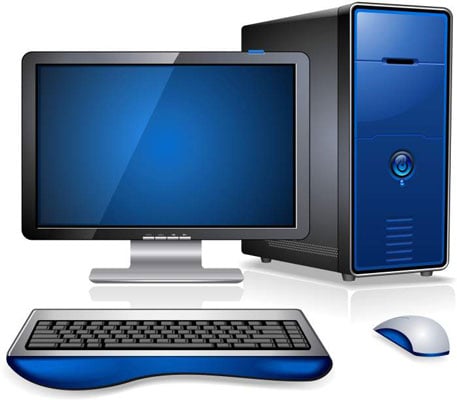
PC is a single user device, it can be used by a user at a time. It is a programmable computing machine.


Image result for pc


    The two principal characteristics of a computer are-


  • It responded to a specific set of instruction. In a well defined manner.
  • It can execute a prerecorded list of instructions.


Its components- 


There are four components of the PC-


  • Input (accept data)
  • Process (process data)
  • Output (Produced data)
  • Storage (Store data)


Input-

It is a raw information entered into a computer from the input device. It is a collection of letters, numbers and images, etc.


Process-

It is the separation of data as per given instruction. It is totally internal process of the computer system.


Output-

It is the processed data given by computer after data processing output is called as a result.


Storage-

It is the area where data can be left on a permanent basis. We can save these results in the storage devices for the future use.


Sunday, July 21, 2019

Types of Computer

There are Five types of Computer-


  • Personal Computer
  • Workstation Computer
  • Mini Computer
  • Super Computer
  • Micro Computer


Personal Computer-


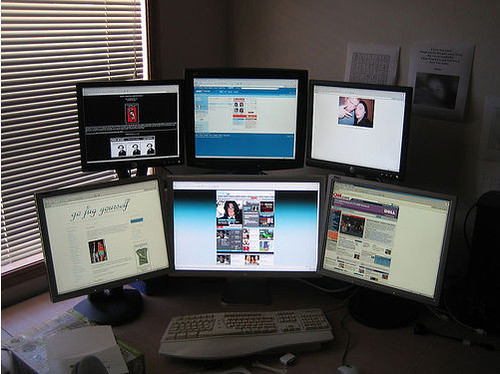
A small single user computer based on a microprocessor. In addition to a microprocessor a personal computer has a keyboard for entering data, a monitor for displaying information of the output. A storage device for saving data.


Image result for personal computer


Workstation Computer-


A powerful single user computer. A workstation computer is like a personal computer. But it has a powerful microprocessor and a higher quality monitor.


Image result for workstation computer


Micro Computer-


The processor is very small, so that processor is called a microprocessor add device is called a microprocessor.


Image result for micro computer

Super Computer-


The processor is bigger than other computers and processing capacity, higher  than other device. It is a multiuser fastest calculating device, generally use in nuclear science for calculating purposes.


Image result for supercomputer


Mini Computer-


A minicomputer is a multiuser computer. The processor of minicomputer is smaller and larger than micro computer. It is a multiuser device. It is generally used by a design company for commercial use. 
Image result for mini computer

Friday, July 19, 2019

Generation of Computer

There are mainly five generations of computer for given below-


First Generation of Computer-


The period of First Generation- (1945-1956)


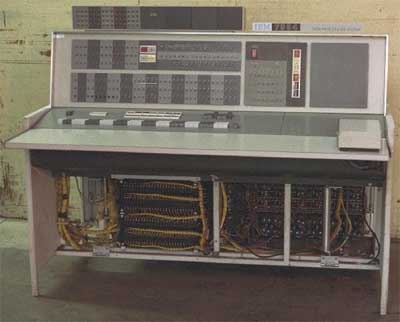
First generation of computer started with using vacuum tubes as the basic components for memory and circuitry for CPU (Central Processing Unit). These tubes like electric bulbs produced a lot of heat and were prone to frequent fusing of the installations, therefore were used. 
             In this generation mainly batch processing operating system and punched cards, paper tape, magnetic tape input and output device were used.


Image result for first generation of computer
                                                         

The main features of first generation are-


  • Vacuum tube technology.
  • Unreliable.
  • Supported machine language only.
  • Very costly.
  • Generate lots of heat.
  • Slow input/output devices.
  • Huge size.
  • Need of AC.
  • Non portable.
  • Consumed lots of electricity.

Some computers of this generation were-


  • ENIAC
  • EDVAC
  • UNIVAC
  • IBM-701
  • IBM-650

Second Generation of Computer-


The period of Second Generation- (1956-1963)


This generation of computer using Transistor was cheaper, consume  less power, more compact in size, more reliable and faster than first generation. Machine made of Vacuum tubes. In this generation magnetic cores were used as primary memory and magnetic tapes  and magnetic disk as secondary storage devices.
          In this generation assembly language and high level programming language like FORTRAN, COBOL were used. There were Batch processing and multiprogramming operating system used.

Second Generation


The main features of Second Generation are-


  • Use of Transistor.
  • Reliable as compared to First Generation Computers.
  • Smaller in size as compared to First Generation Computers. 
  • Generate less heat as compared to First Generation Computers.
  • Consume less heat as compared to First Generation Computers.
  • Faster than as compared to First Generation Computers.
  • Still very costly.
  • Support machine and assembly language.

Some Computers of Second Generation-


  • IBM 1620
  • IBM 7094
  • CDC 1604
  • CDC 3600
  • UNIVAC 1108

Third Generation of Computer-


The period of Third Generation - (1964-1975)


The Third Generation Computer is marked by the use of Integrated Circuits (IC's) in place of transistors. A single IC has many transistors, registers and capacitors along with the associated circuitry. The IC was invented by Jack Kilby. This development made computers smaller in size, reliable and efficient. 
         In this generation Remote processing, Time-sharing, Real-time, Multiprogramming operating system was used.


Generation of computers

The main features of Third Generation are-


  • IC used.
  • More reliable. 
  • Smaller in Size.
  • Generate less heat.
  • Faster.
  • Lesser maintenance.
  • Still costly.
  • AC needed.
  • Consume lesser electricity.
  • Support high level language.


Some Computers of this Generation are-


  • IBM-360 series.
  • Honeywell-6000 series.
  • PDF (Personal Data processing)
  • IBM-370/168

Fourth Generation of Computer-


The period of Fourth Generation-(1975-1995)


The Fourth Generation of Computer is marked by the use of very large Scale Integrated (VLSI) circuits. VLSI circuit having about 5000 transistors and other circuit element and their associated circuits on a single chip mode, it is possible to have microcomputers of fourth generation. 
In this generation Time- sharing, Realtime, Networks, Distributed Operating System was used.
All the high level languages like C and C++ DBASE etc. Were used in this generation. 

Image result for fourth generation of computer


The main features of Fourth Generation are-

  • VLSI technology used.
  • Very cheap.
  • Portable and reliable.
  • Use of PCs.
  • Very small in size.
  • Pipeline processing.
  • No AC needed.
  • The Concept of the internet was introduced.
  • Computers became easily available. 

Some Computers of this generation were-


  • DEC 10 
  • STAR 1000
  • PDP 11
  • CRAY-1 (Super computer)
  • CRAY-X-MP (Super computer)


Fifth Generation of Computer-


The period of Fifth Generation- (1995-Today)


In the Fifth Generation, the VLSI technology became ULSI (Ultra Scale  Integration.) technology, resulting in the production of microprocessor chips having ten million electronic components.
This generation is based on parallel processing hardware and AI (Artificial Intelligence) Software. 
All the high level languages like C and C++, JAVA, .Net etc.  Are used in this generation.


Image result for fifth generation of computer


AI includes-


  • Robotics
  • Neural Network 
  • Game Playing
  • Development of an expert system to make to a decision in  real situations.
  • Natural language understanding and generation. 

Image result for fifth generation of computer

The main features of Fifth Generation are-


  • ULSI technology
  • Development of true artificial intelligence
  • Development of natural language processing 
  • Advancement in parallel processing
  • Advancement in super conductor technology
  • More user-friendly interface with multimedia features
  • Availability of very powerful and compact 
  • Computers at cheapest rate

Some Computers of this generation-


  • Desktop 
  • Laptop
  • Notebook
  • Ultra book 


Monday, July 15, 2019

Characteristics and Applications of Computer

Characteristics of Computer-


The characteristics of computer that have made them so powerful and universally useful are speed, accuracy, diligence, versatility, and storage capacity. These are some characteristics of of computer given below-

  • Speed-

Computer work at an incredible speed a powerful computer is capable of performing about 3-4 million simple instructions per second.

  • Accuracy-

In addition to being fast. Computer are also accurate, error that may occur can almost always be attributed to human error programs written by the programmers.

  • Diligence-

Unlike human being computers are highly conscious. They do not suffer from human traits of boredom and tiredness resulting in lack of concentration computers. Therefore are better than human beings in performing voluminous. 

  • Versatility-

Computers are versatile machine and are capable of performing any task as long as it can be broken down into a series of logical step.


  • Storage Capacity-

Today's computers can store large volumes of  data. A price of information once recorded in the computer never be forgotten and be retrieved almost instantaneously.

Applications of Computer-

  • Business
  • Banking
  • Education
  • Marketing 
  • Health care
  • Military
  • Communication
  • Government
  • Entertainment


What is Computer?

Computer-

 A computer is an electronic device that is able to make informed as input and process it to make new information as output.

Or

A computer is a device that can be instructed to carry out arbitrary sequences of arithmetic or logical operations automatically.

Or

The computer is an electronic device that is designed to work with information. It takes the new data as input from the user and process these data under the control of a set of instructions called program and give the result as output and save the output for the future use. It can process both numerical and non-numerical (arithmetic and logical). 


PC and its Components

Definition of PC- PC is a single user device, it can be used by a user at a time. It is a programmable computing machine. ...