There are mainly five generations of computer for given below-
First Generation of Computer-
The period of First Generation- (1945-1956)
First generation of computer started with using vacuum tubes as the basic components for memory and circuitry for CPU (Central Processing Unit). These tubes like electric bulbs produced a lot of heat and were prone to frequent fusing of the installations, therefore were used.
In this generation mainly batch processing operating system and punched cards, paper tape, magnetic tape input and output device were used.
The main features of first generation are-
- Vacuum tube technology.
- Unreliable.
- Supported machine language only.
- Very costly.
- Generate lots of heat.
- Slow input/output devices.
- Huge size.
- Need of AC.
- Non portable.
- Consumed lots of electricity.
Some computers of this generation were-
- ENIAC
- EDVAC
- UNIVAC
- IBM-701
- IBM-650
Second Generation of Computer-
The period of Second Generation- (1956-1963)
This generation of computer using Transistor was cheaper, consume less power, more compact in size, more reliable and faster than first generation. Machine made of Vacuum tubes. In this generation magnetic cores were used as primary memory and magnetic tapes and magnetic disk as secondary storage devices.
In this generation assembly language and high level programming language like FORTRAN, COBOL were used. There were Batch processing and multiprogramming operating system used.
The main features of Second Generation are-
- Use of Transistor.
- Reliable as compared to First Generation Computers.
- Smaller in size as compared to First Generation Computers.
- Generate less heat as compared to First Generation Computers.
- Consume less heat as compared to First Generation Computers.
- Faster than as compared to First Generation Computers.
- Still very costly.
- Support machine and assembly language.
Some Computers of Second Generation-
- IBM 1620
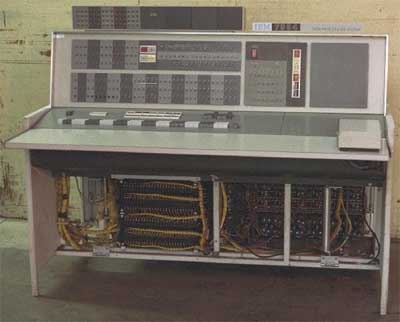
- IBM 7094
- CDC 1604
- CDC 3600
- UNIVAC 1108
Third Generation of Computer-
The period of Third Generation - (1964-1975)
The Third Generation Computer is marked by the use of Integrated Circuits (IC's) in place of transistors. A single IC has many transistors, registers and capacitors along with the associated circuitry. The IC was invented by Jack Kilby. This development made computers smaller in size, reliable and efficient.
In this generation Remote processing, Time-sharing, Real-time, Multiprogramming operating system was used.
The main features of Third Generation are-
- IC used.
- More reliable.
- Smaller in Size.
- Generate less heat.
- Faster.
- Lesser maintenance.
- Still costly.
- AC needed.
- Consume lesser electricity.
- Support high level language.
Some Computers of this Generation are-
- IBM-360 series.
- Honeywell-6000 series.
- PDF (Personal Data processing)
- IBM-370/168
Fourth Generation of Computer-
The period of Fourth Generation-(1975-1995)
The Fourth Generation of Computer is marked by the use of very large Scale Integrated (VLSI) circuits. VLSI circuit having about 5000 transistors and other circuit element and their associated circuits on a single chip mode, it is possible to have microcomputers of fourth generation.
In this generation Time- sharing, Realtime, Networks, Distributed Operating System was used.
All the high level languages like C and C++ DBASE etc. Were used in this generation.
The main features of Fourth Generation are-
- VLSI technology used.
- Very cheap.
- Portable and reliable.
- Use of PCs.
- Very small in size.
- Pipeline processing.
- No AC needed.
- The Concept of the internet was introduced.
- Computers became easily available.
Some Computers of this generation were-
- DEC 10
- STAR 1000
- PDP 11
- CRAY-1 (Super computer)
- CRAY-X-MP (Super computer)
Fifth Generation of Computer-
The period of Fifth Generation- (1995-Today)
In the Fifth Generation, the VLSI technology became ULSI (Ultra Scale Integration.) technology, resulting in the production of microprocessor chips having ten million electronic components.
This generation is based on parallel processing hardware and AI (Artificial Intelligence) Software.
All the high level languages like C and C++, JAVA, .Net etc. Are used in this generation.
- Robotics
- Neural Network
- Game Playing
- Development of an expert system to make to a decision in real situations.
- Natural language understanding and generation.
The main features of Fifth Generation are-
- ULSI technology
- Development of true artificial intelligence
- Development of natural language processing
- Advancement in parallel processing
- Advancement in super conductor technology
- More user-friendly interface with multimedia features
- Availability of very powerful and compact
- Computers at cheapest rate
Some Computers of this generation-
- Desktop
- Laptop
- Notebook
- Ultra book